My homeland My homeland Glory and beauty Sublimity and prettiness Are in your hills Life and deliverance Pleasure and hope Are in your atmosphere Will I see you? Safe and comfortable
Sound and honored Will I see you? In your eminence Reaching the stars My homeland My homeland * The youth will not get tired Their goal is your independence
Or they die We will drink from death But we will not be slaves to our enemies We do not want An eternal humiliation Nor a miserable life We do not want But we will return Our great glory My homeland My homeland * The sword and the pen Are our symbols Not talking nor quarreling Our glory and covenant And a duty to fulfill it Shake us Our honor Is an honorable cause A raised flag O, your beauty In your eminence Victorious over your enemies My homeland My homeland
As mentioned above, Ibrahim is Fadwa’s brother who initially introduced her to poetry and literature. Born and raised to a prominent governing family in Nablus in 1905, his works are believed to have influenced generations and echoed the very silenced Palestinian voices at the turn of the 20th century.
My Homeland seems to serve as both a tribute and reminder of how resilient Palestinians are, bearing and carrying “the sword and the pen (as) (their) symbols” at all times – proof that the Palestinian cause will only die out once each and every single pen runs out of ink.
Considered one of the most distinguished contemporary Arab poets, Fadwa Tuqan’s works have been met with great international success and awards. Born in 1917, she has witnessed her homeland sweep from British rule to leave room for the creation of an Israeli state and a Palestinian authority within decades – an experience
that she made sure to pen down. Her introduction to poetry was made through her brother who is no other than the illustrious Ibrahim Tuqan, another Palestinian nationalist poet whose work is believed to have rallied Arabs during their revolt against the British mandate.
In this poem, Fadwa attempts to shed light, through a handful of verses, on her roots and how home will always be home no matter what. Titled Enough for Me, it seems as if the author wants us to know that no matter what could happen to her homeland it will always be hers and no one will be able to take that away from her.
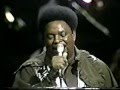
There are plenty of places to start exploring Nina Simone’s music, from the songs that have worked their way into our cultural fabric through soundtracks and TV commercials to the more challenging music she made as she evolved musically, personally, and politically. One thing we’d beg you to check out on the way is her epic expansion of George Harrison’s “Isn’t It A Pity.” Isn't it a pity
Isn't it a pity
You don't know what I'm talking about yet
But I will tell you soon
It's a pity
Isn't it a pity
Isn't it a shame
Yes, how we break each other's hearts And cause each other pain
How we take each other's love
Without thinking anymore
Forgetting to give back
Forgetting to remember
Just forgetting and no thank you
Isn't it a pity
Some things take so long
But how do I explain
Why not too many people can see
That we are all just the same
We're all guilty
Because of all the tears
Our eyes just can't hope to see
But I don't think it's applicable to me
The beauty that surrounds them
Child isn't it a pity
How we break each other's hearts
And cause each other pain
How we take each other's love The most precious thing
Without thinking anymore
Forgetting to give back
Forgetting to keep open our door
Isn't it a pity Isn't it a pity
Some things take so long
But how do I explain
Isn't it a pity
Why not too many people
Can see we're all the same
Because we cry so much
Our eyes can't, can't hope to see
That's not quite true
The beauty that surrounds them
Maybe that's why we cry God, isn't it a pity
Lord knows it's a pity
Mankind has been so programmed
That they don't care about nothin'
That has to do with care C-a-r-e
How we take each other's love The most precious thing
Without thinking anymore
Forgetting to give back
Forgetting to keep open the door
But I understand some things take so long
But how do I explain
Why not too many people Can see we're just the same
And because of all their tears
Their eyes can't hope to see
The beauty that surrounds them
God, isn't it a pity
The beauty that surrounds them
It's a pity We take each other's love
Just take it for granted Without thinking anymore
We give each other pain And we shut every door
We take each other's minds
And we're capable of taking each other's souls
We do it every day Just to reach some financial goal
Lord, isn't it a pity, my God
Isn't it a pity, my God
And so unnecessary
Just a little time, a little care A little note was written in the air
Just the little thank you,
We just forget to give back
Cause we're moving too fast Moving too fast
Forgetting to give back But some things take so long
And I cannot explain
The beauty that surrounds us
And we don't see it We think things are just the same
We've been programmed that way
Isn't it a pity
If you want to feel sorry Isn't it a pity
Isn't it a pity
The beauty sets the beauty that surrounds us
Because of all our tears
Our eyes can't hope to see
Maybe one day at least
I'll see me And just concentrate on givin',
givin', givin', givin'
And till that day
Mankind doesn't stand a chance
Don't know nothin' about romance
Everything is plastic Isn't it a pity My God.
Harrison wrote the song about the breakup of the Beatles, but Simone moves it somewhere more personal in terms of her own struggles and more global in terms of the civil rights movement and the disillusionment that followed. She makes critical changes to the lyrics — sometimes as simple as changing a pronoun, sometimes profound as adding entire lines that call the motives, morality, and future of all mankind into question — and with little more than her voice and piano, turns a rock song into an expansive mix of all the music she knows, from Bach to the blues to gospel to jazz. She sings she cries, she preaches. And she plays her ass off. It’s a performance as complex and beautiful and challenging as Miss Simone herself.
















 Posts
Posts